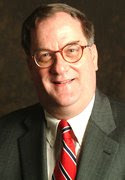
The September/October 2009 issue of the Harvard Education Letter has an article by David McKay Wilson entitled "The Invisible Hand in Education Policy" on the role of economists in analyzing and proposing education policy.
Wilson maintains that until 30 years ago, psychologists and ed school professors exercised most of the academic influence in developing policy. In contrast, today, Wilson says, all over the education world you see economists studying the effects of government policies and "helping to design programs that provide incentives—-and disincentives—-for students and school districts." Concerning this picture drawn by Wilson, I would say that the academic economists I know are, yes, busy studying policy, but not that busy setting, devising, or designing policy.
Wilson points to a number of areas where economists have made contributions, including class size, school finance, and teacher training.
Class Size. Wilson quotes economist Richard J. Murnane, a professor at Harvard’s Graduate School of Education, who says: "The cost of reducing class size is great....[Although] there are modest benefits, it’s not clear that doing so is the best use of scarce resources.”
I would say that class size is a perfect example of an issue where politicians and bureaucrats are ignoring the findings of social scientists.
School Finance. Wilson notes that economist Eric A. Hanushek, a senior fellow at Stanford University’s Hoover Institution, said in a 1981 paper that money alone wasn’t the answer for improving America’s schools.
“At the time, everybody thought that we should treat schools like going to the moon, that if we just put in enough resources, we could solve everything,” Hanushek said. “We found that money wasn’t the only solution. And that led to lots of questions. One of the aspects of doing better was to have better accountability.”
Teacher Training. Washington, D.C., public schools chancellor Michelle Rhee had as her thesis adviser at Harvard University's Kennedy School of Government economist Thomas J. Kane. Kane has studied alternative preparatory routes for teachers in the New York City public schools. He found that students performed similarly, whether their teacher had a New York state certification or had passed through the alternative New York City Teaching Fellows program. When Rhee came to the District of Columbia schools, she asked Kane to work on measuring teacher effectiveness via a value-added analysis.
Economists have been studying education since Adam Smith. Since I am a political scientist, not an economist, I have no personal interest in how much attention is paid to the findings of economics. But I have on my bookshelves rows of books by economists filled with valuable insights on education -- almost all those insights have in fact been ignored, dismissed, or rejected by politicians and policymakers.
Addendum: As part of a cliched journalistic put-down of the merits of economics, Wilson reminds his readers that economics was called "the dismal science” by 19th century historian Thomas Carlyle. What Wilson neglects to tell his readers is that Carlyle was an admirer of feudalism. He was a proponent of returning recently emancipated black Africans to servitude and supported brutal suppression of an uprising in Jamaica. Carlyle disliked the fact that economists often opposed slavery on moral principle and as economists they pointed to the lessened productivity of slave labor. Hence it was that in his essay entitled "Occasional Discourse on the Nigger Question," Carlyle termed economics "the dismal science" -- indeed he also calls it a "rueful" science and a "dreary, desolate, and indeed quite abject and distressing" one, by which he means that economics is not supportive of feudalism and slavery. If one means by "dismal," "not upholding slavery" -- then the designation is a badge of honor for economics.
Showing posts with label economic analysis. Show all posts
Showing posts with label economic analysis. Show all posts
Thursday, August 27, 2009


Subscribe to:
Posts (Atom)